The Beervana Blog has moved. This site is no longer actively updated, though I'm not doing an automatic redirect for people who are landing in the archives. Please bookmark the new site and visit it for current content.
Thanks--
Update. Per the comment below, the RSS feed is: https://www.beervanablog.com/beervana/?format=rss

Monday, April 03, 2017


Thursday, March 30, 2017
An Update on Cider in Oregon

On Monday, Cider Riot's Abram Goldman-Armstrong put 63 hectoliters--nearly 60 barrels--of cider in cans for the first time. Yesterday he had a media event at his pub and cidery to introduce Everyday Cider and it made me realize some things have changed since I last checked in on cider. Time for an update.
Lest we bury the lead, Abe dropped this remarkable stat that could be inferred, perhaps, by his large canning run: in the city of Portland, cider now accounts for 6% of the beer market. Not the craft market, but all beer sold in Portland. As a handy point of comparison, the craft segment of beer did not hit the 6% mark nationally until 2011. There are surely many towns where craft constitutes a smaller share than 6%.
This is surprising. It was as recently as five years ago that you couldn't reliably find a handle with cider in your local pub. Now that has inverted; it's rare to walk into one that doesn't have at least one cider, and they're in a majority of the restaurants I walk into, too. Still, the bottom fell out of cider a couple years back, as the shelves started to fill with very sweet, soda-like mass market offerings. The driver of the segment, Angry Orchard, was everywhere, and it took the brunt of that slowdown. I wasn't sure how thing were doing and frankly feared the worst. Quietly, however, local producers have continued to solidify a base of support in places like the Northwest and New England, and sales are clearly still strong.
Companies
like Cider Riot are one of the reasons. Abe makes dry cider--completely
dry in nearly every case. (Everyday Cider is the first exception--it
has a touch of sucralose, but is still drier than most products out
there.) Apple juice contains yeast-friends simple sugars, and left
alone, all will get consumed. What's left behind is alcohol and whatever
flavor and aromatics the apple contained (tannins and acids principle
among them). Fermentation can produce esters which, along with some of
the aromas, suggest sweetness, but these qualities are very far from the
soda-like sweetness you find in supermarket ciders.

To palates new to cider, naive and somewhat jejune in aesthetics, sweetness is a bridge, a point of familiarity. But it's a blunt force, and as palates mature, people want ever more dry ciders where the flavors and aromas of the fruit are exposed. Abe, like most cider-makers, doesn't have access to the amount of good cider fruit he'd like, but he's made a specialty of producing great, palatable cider from simple culinary apples. I actually think this stage is still a bit young, and as the fields start to bear more interesting fruit, our collective palates will get even more sophisticated. (Cider Riot does have access to some cider apples, and releases bottles of these from time to time.)
EZ Orchards has led the way in this kind of cider, but others are catching up. 2 Towns just yesterday released Afton Fields, one of their rustic ciders made with good fruit. Baird and Dewar, Wildcraft, Art+Science, Rack and Cloth, Runcible, Slopeswell, and others are beginning to push the envelope for what quality and craft will look like in the next decade. I don't know if there are any official counts of cidery numbers in Oregon, but it's well past fifty at this point, and a number of them are shooting to make world-class products.
I asked Abe what he thought the high-water mark for cider might be, and he guessed it would top out at about 10% of the beer market. That seems about right to me. Cider has never been a volume product, and the more it inclines toward quality, the less volume will matter.
When I first started touring cideries and visiting cider-makers for Cider Made Simple four years ago (on sale, for the moment, for eight bucks at Amazon!),
I wondered which direction it would develop. The answer is starting to
become evident. The "mass" end of the spectrum is drier, more
consistent, and more interesting than it was in 2013--stuff like Cider
Riot's Everyday Cider is leagues better than the first Angry Orchards.
Ciders that seemed gimmicky then, like hopped ciders, have become
credible products. Abe has one called FX Matthieu on tap that uses a
pound per barrel of hops and is vivid and alive in a way the early
versions weren't. Fruited and flavored ciders are getting more
sophisticated, too--and drier!
But more importantly, cider is developing that critical high-end tier that has always buoyed successful product categories. We need to know what a thing is capable of before we can assess any given example. If cider's ceiling was Angry Orchard, that's one thing. If it's EZ Orchard's Cidre, that's another. Knowing how good cider can be, we expect even easy-drinking supermarket examples to satisfy.
That's happening. It may have not drawn the headlines it did a couple years ago, but cider is coming right along.

To palates new to cider, naive and somewhat jejune in aesthetics, sweetness is a bridge, a point of familiarity. But it's a blunt force, and as palates mature, people want ever more dry ciders where the flavors and aromas of the fruit are exposed. Abe, like most cider-makers, doesn't have access to the amount of good cider fruit he'd like, but he's made a specialty of producing great, palatable cider from simple culinary apples. I actually think this stage is still a bit young, and as the fields start to bear more interesting fruit, our collective palates will get even more sophisticated. (Cider Riot does have access to some cider apples, and releases bottles of these from time to time.)
EZ Orchards has led the way in this kind of cider, but others are catching up. 2 Towns just yesterday released Afton Fields, one of their rustic ciders made with good fruit. Baird and Dewar, Wildcraft, Art+Science, Rack and Cloth, Runcible, Slopeswell, and others are beginning to push the envelope for what quality and craft will look like in the next decade. I don't know if there are any official counts of cidery numbers in Oregon, but it's well past fifty at this point, and a number of them are shooting to make world-class products.
I asked Abe what he thought the high-water mark for cider might be, and he guessed it would top out at about 10% of the beer market. That seems about right to me. Cider has never been a volume product, and the more it inclines toward quality, the less volume will matter.
 |
| FX Matthieu. So many hops it has a head! |
But more importantly, cider is developing that critical high-end tier that has always buoyed successful product categories. We need to know what a thing is capable of before we can assess any given example. If cider's ceiling was Angry Orchard, that's one thing. If it's EZ Orchard's Cidre, that's another. Knowing how good cider can be, we expect even easy-drinking supermarket examples to satisfy.
That's happening. It may have not drawn the headlines it did a couple years ago, but cider is coming right along.
Wednesday, March 29, 2017
A Brand New Blog!
At long last, and with surprisingly few nostalgic glances over the shoulder, I am leaving Blogspot forever. Yes, I've embraced parallax scrolling, big, grabby titles, and vivid, full-page photos. Please welcome the new and future site of this here rag:
You'll see there are a few upgrades. Principally:
A special shout-out to Chris McClellan, who guided me through this project. He helped me find an aesthetic (gently) and did all the heavy technical lifting. Matter of fact, I managed to screw the site up just last night, and he went in and fixed it. Give him a holler if your site needs tuning up--he is good at this stuff.

You'll see there are a few upgrades. Principally:
- Better site architecture.
- Better, more elegant layout.
- A more photo-forward design.
- Better archives, with certain categories of timeless content highlighted (things like The Brewing Process, Beer Culture, The Business of Beer, and American and European Stories).
- A decent URL. (Nope, beervana.com is still not available; this one's pretty good.)
A special shout-out to Chris McClellan, who guided me through this project. He helped me find an aesthetic (gently) and did all the heavy technical lifting. Matter of fact, I managed to screw the site up just last night, and he went in and fixed it. Give him a holler if your site needs tuning up--he is good at this stuff.

Tuesday, March 28, 2017
More on Mexico; A Lupulin Powder Blind Tasting
We have a new podcast for your listening pleasure. The main subject is Mexican craft beer, featuring an interview with Enrique Aceves-Vincent Ramirez of Guadalajara’s Loba Brewing. We talk about the Mexican market, what it's like getting started there, and where things may be headed. A great primer for those of you interested in our southern neighbor.
Also on that podcast, a follow-up on my experiment with lupulin powder. (Manufacturer description: "the concentrated lupulin of whole-leaf hops containing resins and aromatic oils.") Recall that I received a package of a new product from YCH Hops--now apparently available for purchase--and used them in a batch of homebrew. Patrick and I had just brewed a pale ale when the package of Simcoe lupulin powder arrived, so I dry-hopped half the batch with that product, and half the batch with standard Simcoes.
I poured the two beers and had Patrick--who hadn't had a chance to taste them yet--taste them blind. That segment of the podcast has at least two surprises. I will of course leave it to you to listen and find out what they were. (I'm trying to get better at teasing this stuff!) It's actually a follow up to a different podcast, in which we visited Imperial Yeast. They gave us their "Dry Hop" blend to try, and it produced the sludgy look of a New England IPA all the geeks are excited about. We reflect a bit on that, too.
Give it a listen (it's available on iTunes and Google Play as well):
Also on that podcast, a follow-up on my experiment with lupulin powder. (Manufacturer description: "the concentrated lupulin of whole-leaf hops containing resins and aromatic oils.") Recall that I received a package of a new product from YCH Hops--now apparently available for purchase--and used them in a batch of homebrew. Patrick and I had just brewed a pale ale when the package of Simcoe lupulin powder arrived, so I dry-hopped half the batch with that product, and half the batch with standard Simcoes.
I poured the two beers and had Patrick--who hadn't had a chance to taste them yet--taste them blind. That segment of the podcast has at least two surprises. I will of course leave it to you to listen and find out what they were. (I'm trying to get better at teasing this stuff!) It's actually a follow up to a different podcast, in which we visited Imperial Yeast. They gave us their "Dry Hop" blend to try, and it produced the sludgy look of a New England IPA all the geeks are excited about. We reflect a bit on that, too.
Give it a listen (it's available on iTunes and Google Play as well):
Monday, March 27, 2017
Vignette #14: Carlo Grootaert (De Struise Brouwers)
Brewer vignettes feature quotes from brewers I picked up in my travels around the world.
On the origins of Pannepot, the brewery's flagship.
 Here Grootaert interjected with a story about the name. It refers in part to the village of De Panne and the boats the fishermen there use, a flat-bottomed vessel able to land on sandy beaches. That is not, however, the boat you see on the label. That is the second half of the homage, which he went on to describe:

On the origins of Pannepot, the brewery's flagship.
“I heard that in my family, there were homebrewers at the time—100 years ago. The women were the brewers because the men were at sea to catch herrings. The women made beer in the wintertime on the stove.”

“The label is actually my great-granddad’s boat, the B-50. He died in 1918. He went to France in WWI. The war was finished November 11, 1918. And he came in his boat back to Belgium—but he came in a storm and on the 18th of November he fell overboard and drowned. So he didn’t make it. It’s a sad story.”He continued on with the story behind Pannepot, Struise's thick, jammy beer.
“Anyway, the women made beer on the stove at the time. It was so strong and sweet and very alcoholic so they kept in a little cask in the cellar. If they wanted some beer, they went down with the jug and tapped off some beer—it was flat. But they didn’t like cold beer. So they had to heat it up: they put the metal poker in the fire and it was glowing red, and when they put it in the thick beer (it didn’t have a name, it was called “thick beer”) with lots of sugars in it and the sugars instantly caramelized. It gave it a roasted, caramelized flavor.”

Friday, March 24, 2017
La Cerveza Artesanal de México, Part 1

My journey into cervezas artesanales--Mexican craft beer--began at Societe Brewing in San Diego. I'd just flown in from Portland, and Hector Ferreira thought it would be a shame to miss one of San Diego's bounty when so many were at hand. This turned out to be a better metaphor than I imagined; it's impossible to imagine the breweries of Baja California emerging in the numbers or form they have without this brewing mecca right on their border. Our next stop was just south in Tijuana ("TJ" to locals) at Norte Brewing--one of the country's best--which is owned by Carlos Macklis, who splits his time between the two cities. Later on I'd meet Ivan Maldonado, a brewer at Silenus, another Tijuana brewery; he also brewed across the border at Fall Brewing. This kind of cultural and human resource exchange is typical.
If you can't call to mind a Mexican craft brewery, don't feel too bad. It's a surprisingly recent phenomenon, dating back a little more than a decade. The first significant craft brewery was Minerva, from Jalisco, launched in 2003. That somewhat overstates things, however. One of the people most able to see the scope of the market is Tero Moliis, who founded an ambitious ratings app called Maltapp. "Two years ago--well, in 2014, let's say, there were fifty or as many as 75 breweries," he told me. "Today there are over 600." Over the past year, they've been opening at a rate of more than one a day.
Tijuana and San Diego have shared a boozy relationship dating back nearly a century. They are in many respects twin cities divided by an international border, and residents wash back and forth each day like the rising and falling tide (albeit one slowed considerably by border guards on the northbound side). You might therefore reasonably ask why craft brewing started so late in Baja. The reason--as is so often the case--is because of legal barriers. Mexico is dominated by a duopoly of giants--Cuauhtémoc Moctezuma and Grupo Modelo--who until 2013 had absolute control over the market. They held powerful exclusivity contracts with retailers that kept small breweries out, which made starting a brewery dicey in the extreme.
Then in 2013 that all changed:
The two companies do so by holding exclusivity agreements with a large number of restaurants and bars throughout Mexico, limiting the access of micro - brewed and other beers not distributed by the two companies. On July 11th, 2013, the CFC announced a decision that these two companies would have to limit their exclusivity contracts to 25 percent of their points of sale in small grocery stores, restaurants, and bars, effective immediately. This number is to reduce to 20 percent by 2018.Breweries in Mexico now sell directly to the retailer. It's an arrangement that seems to work out for them; I found no brewers who thought access to market was a problem. (I found many who were mystified by our three-tier system.) Tax law is another fight they have yet to wage--the structure means that craft breweries end up paying twice as much to the government, with concomitant price hikes to the customer. This limits their reach to upper-end bars and restaurants, but for an industry that is still less than 1% of the market, is not yet hobbling growth. (Little breweries have a trade organization similar to the Brewers Association fighting for these changes.)
Back to Norte, which is on the fifth floor of what is mostly a parking lot, but inside it looks much like anything you’d find in Portland--or San Diego. Big chalkboard over the bar, a lineup of beers that includes three hoppy ales, a small kit Macklis designed himself behind glass to the side of the bar, and a sky view of downtown. Not only do brewers in Baja have access to ingredients and equipment just across the border, but they can learn from and collaborate with San Diegans. Right on cue, I bumped into Keith Shaw, lead brewer at Modern Times, who was down for a pint. After tacos, we made another pit stop at Plaza Fiesta, the "colectivo" I mentioned, and had a couple pints in pubs that took their style cues straight from north of the border. In Baja, as one brewery told me, "it all pours down" from San Diego.

That is not true everywhere. Despite the way Americans see their neighbor to the north, Mexico is not all just border cities. The further into the country you go, the less US craft brewing has a hold. I was in the country to speak at the Ensenada Beer Fest (full disclosure: the fest paid for my travel), which poured beer from breweries from all over Mexico. IPAs are popular in Baja, but the pull of hops grows weaker with every mile you move from San Diego. The two other central hubs of beer are Guadalajara (1400 miles south) and Mexico City (1800 miles). Walking around the beer fest, I saw a lot of stouts, amber, and pale ales from breweries in those parts, but few trendy hoppy styles Americans make. (The phrase "New England IPA" was never mentioned in the five days I was there.)
I’ve harped endlessly about the way beer culture is formed—the organic communication between the brewer and drinker that somehow produces a distinctive palate and way of brewing region to region. The Mexican market is still too young to know what they want, which means the brewers are experimenting pretty broadly. Nevertheless, that formative period the United States went through that lasted from the earliest breweries until the first shakeout took two decades. Here, they've compressed birth and adolescence into just a few.
Surprisingly—or perhaps not—dark ales do seem to have emerged as the early favorite among drinkers. I’ve heard that from nearly every brewer I’ve spoken to. It’s surprising because Mexico doesn’t have the climate I associate with these heavier ales. But as Enrique Aceves-Vincent Ramirez, the brewer at Guadalajara’s Loba Brewing pointed out, for drinkers excited by craft beer, it seems like the style as far from Corona as you can go. (That was exactly what happened in the US, too.)
The learning curve for Mexican breweries is far, far shorter than it was for Americans. Most brewers haven’t been professionally trained, but there’s so much more information and communication out there now that they’re learning very fast. English-style ales seem to be the dominant category (again, much like the US in the 1980s), but brewers are already moving on. It seems to have occurred almost simultaneously around the country that fruit and culinary ingredients, particularly native Mexican ones, offer a deep vein to mine. In the short time I’ve been here, I’ve seen fruit, spices, and in one case, squid ink, all deployed.
 |
| Albur's brown ale was a highlight at the fest. |
I think the big transition will happen when brewers start to get access to locally-grown barley and hops, which they're keen to do. Significant barley crops have been grown in Mexico for centuries--and varieties bred for the climate have been introduced periodically since the 1960s. They grow six-row strains, and Hector Ferreira, who brews at Cerveceria 159, told me they're not particularly great barleys, so there's still work to do, but that's promising.
Hops are obviously a bigger challenge. At 32 degrees, Tijuana is south of the ideal hop-growing zone--and places like Mexico City, at 19 degrees, are far too far south. But a number of the brewers I spoke to are keenly interested in Neomexicanus hops, which flourish at southerly latitudes.
Beyond this, brewers are already embracing localness in their beers. Paco Talamante, at Canneria Cerveceria in Ensenada, made a wonderful saison with the hard, salty water that bubbles up from the rocky soil. Like Astoria, Oregon, Ensenada used to be a huge canning port, and like Astoria, the canneries all closed. Like Fort George, Talamante wanted to bring canning back to his home town, and he wants his beer to reflect the place as well. It's a sentiment I heard many times during my visit. In this way, Mexicans are way ahead of Americans, who didn't start talking like this for decades after craft beer got started.
There's more to say, but his post is running long so I'll leave it here for now. We'll pick up in future posts with some of the best breweries I found and a few thoughts on the mood and excitement of the Mexican beer scene (which was a balm to this beer fan increasingly tired of the cynicism and anxiety of ours). Until then--
 |
| The Ensenada Beer Fest |
Wednesday, March 22, 2017
The Secrets of Master Brewers
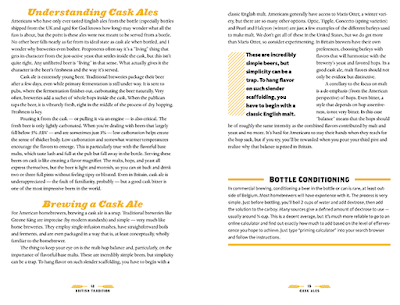
A new title has elbowed its way onto the increasingly-crowded beer section at your local bookseller: The Secrets of Master Brewers, my latest book. It is, foremost, a guide to homebrewing. But it's not just a brewing manual. The idea behind the book was to introduce the idea of national tradition, this notion that people who inhabit a region begin to think about beer in a similar way and develop techniques that accentuate their preferences in beer.
I've organized the book around these national traditions, and each section begins with an introduction describing those elements that define it. The chapters focus not on styles so much as archetypes. Bavarians think about and make lagers very similarly whether they're brewing a bock or helles but differently than the pale lagers made in neighboring Bohemia. Based on my travels and writing, I mapped out the extant national traditions as I know them and the archetypal styles within each. Whether you want to brew one of the beers in the book or just understand them at a deeper level, this book has information you won't find elsewhere.
The Techniques
The Secrets of Master Brewers describes the way classic, archetypal beers are made at the breweries that made them famous. You definitely get the details of mash rests, boil lengths, and fermentation processes, but you also get to hear how brewers think about beer, what they emphasize in their own brewing, their ingredient selection, and specific techniques to bring out the flavors they prize. There's an anthropologic bent throughout. For example:
I recognize not everyone is going to want to buy this book. I hope everyone does pick it up and page through it to see what jumps out. Beer-making is not just a chemical process. It has evolved over the centuries and includes a whole range of local philosophies, approaches, and techniques. If you want to understand how brewers think about the beers they invented, this is your best resource. And, if you want to brew those beers yourself, that's cool, too. Amazon is currently offering a pretty good price, so act now! :-)
 |
| A satisfied customer! |
The Techniques
The Secrets of Master Brewers describes the way classic, archetypal beers are made at the breweries that made them famous. You definitely get the details of mash rests, boil lengths, and fermentation processes, but you also get to hear how brewers think about beer, what they emphasize in their own brewing, their ingredient selection, and specific techniques to bring out the flavors they prize. There's an anthropologic bent throughout. For example:
- John Keeling (Fuller's) explains parti-gyle brewing, and
- Ian Cameron (Traquair) emphasizes the importance of open fermentation.
- Hans-Peter Drexler (Schneider and Sohn) gives the lowdown on ferulic acid rests, and
- Matthias Trum (Bahnhof) provides techniques to conduct lactic fermentations.
- Hedwig Neven (Duvel) describes how to achieve balance in yeast-driven ales, and
- Alexis Briol (St. Feuillien) offers a tutorial on subtle spice infusions in biere de Noel.
- Of course, I didn't neglect the US, and Ben Edmunds (Breakside) gives a seminar on modern techniques for making hoppy ales, while
- Brian Mandeville (Fullsteam) advises readers how to use corn in their brewing.
 |
| click to enlarge |
I recognize not everyone is going to want to buy this book. I hope everyone does pick it up and page through it to see what jumps out. Beer-making is not just a chemical process. It has evolved over the centuries and includes a whole range of local philosophies, approaches, and techniques. If you want to understand how brewers think about the beers they invented, this is your best resource. And, if you want to brew those beers yourself, that's cool, too. Amazon is currently offering a pretty good price, so act now! :-)

Monday, March 20, 2017
The Baja "Colectivo"

Yesterday afternoon, those of us who were still around following the Ensenada Beer Fest made a couple stops. Hey, what else would you expect beer people to do? The second—and for me, final—stop was at Baja Brews, a “colectivo” where several breweries are on hand pouring their beers. Imagine a food court, but with breweries. Someone had the brilliant idea of repurposing an old warehouse into Baja Brews, which spills out on the back to a cliff-side view of the Pacific. Live music plays while you sample beers from one of eight (I think) different breweries. It’s a pretty magical place to get a pint of beer.
This is a thing in Baja, and a really clever idea. We visited a version of this in Tijuana at the Plaza Fiesta, an even more elaborate space of interconnected pubs that you access through ever-sprawling walkways and staircases. That one is so cool largely because of the location, which would be hard to replicate. But the basic idea is very simple and, once I saw it, obvious.

Take Ensenada. The town of around 500,000 got their first brewery less than a decade ago; now they have around twenty. Many are small outfits that would almost certainly struggle to find outlets to serve their beer. Drinkers, confronted with a metastasizing brewery scene, have a hard time tracking down the new breweries. Voila—an eight-in-one tasting room.
The colectivo idea probably depends on a collaborative beer scene, and that’s definitely the case in Baja (and seemingly the entire country). Brewers are as friendly with each other as anyplace I’ve seen, and you can sometimes see them gathered in packs. They are supportive and seem to share ideas liberally. Whether this is because things are so new and the market is healthy and growing, I can’t guess. The colectivo model might last only until the first market contraction. (I also can’t say what happens for those breweries in the colectivo that don’t sell well; seems like a ripe opportunity for resentment.) But at least from a consumer’s perspective, it’s a wonderful idea.

Thursday, March 16, 2017
En Mexico

I send my dispatch today from under the sunny(ish) skies of Ensenada, Mexico. There's an annual craft beer festival down here that has grown to become one of the more important dates on the annual calendar. Over a hundred breweries will be pouring beer on Saturday and as a lead-up there is a series of talks and lectures from I think largely academic types (I met a researcher last night). I got one of the golden tickets to speak, along with the very famous but elusive John Palmer, whose guide to homebrewing remains stubbornly atop the best seller lists in beer, despite my efforts.
The phrase "craft beer" is probably useful here--at least for awhile. The two large beer conglomerates have even more control over the Mexican market than the bigs ever had in the US, and small breweries are fighting an uphill battle. They seem to have adopted the US model of brewing (down to styles), and at the moment seem like a discrete category separate from the Coronas and Tecates and Pacificos.
Things are still quite new, though, and from what I can gather they're getting organized to make the laws more favorable. I jumped at the chance to come because I am remarkably ignorant our our neighbor's beer. I'll be here through Sunday, attempting to absorb as much as I can about the breweries, beer culture, beer styles (but yes, IPAs do seem to be prominent), and business in Mexico. I'll try to bird-dog the trends and see if I can find any nascent Mexican expressions that might be steering the development of distinctive, native beer styles. And I'll definitely try to sit down with at least one Mexican brewer for the podcast.
Updates as I have time, and a full report in due course.
 |
| Carlos Macklis (R) of Norte Brewing in Tijuana, with his head brewer. |
Tuesday, March 14, 2017
New Book + Book Launch

The Book
The idea was an outgrowth of my research for The Beer Bible; in traveling around to Britain, Belgium, Germany, the Czech Republic, and elsewhere, I became far more attuned to the national brewing traditions in those countries. I would periodically post blogs or discuss my travels, and the people who were most interested were invariably homebrewers. People were fascinated about, say, the way in which nearly every Belgian ale spends time in secondary fermentation in a warm room, or how open fermenters are pivotal in developing flavors distinctive in weissbier, and were keen to learn more. So a flicker of an idea sparked in the back of my brain: what if those same brewers I spoke to offered basic advice on their techniques for the homebrewer?
Thus was born The Secrets of Master Brewers, which is part homebrew how-to, and part brewing anthropology. The book is organized to reveal the proclivity of brewers in different countries. I start with an introduction of the national style and what typifies it, and then offer deep dives into classic types of beer, with recipes and formulations offered by brewers who made them famous. The book takes us on a trip to Kelheim, Germany and Tourpes, Belgium and London, England where we learn from masters of weissbier, saison, cask ale--and 23 other classic beer archetypes. The book was mainly designed for homebrewers, but should be interesting and entertaining for anyone with a deep interest in process and technique.
“One of the truly essential books on modern brewing, period. No other book, aimed at professionals or homebrewers, could improve your brewing as much as this one will.”
– Ben Edmunds, Breakside Brewery
The Event
Thursday, March 23rd, 7pm
Columbia Center for the Arts
215 Cascade Ave, Hood River
$10, includes beer from pFriem, Double Mountain, and Solera
Tickets
I'll host a panel discussion with three of my favorite brewers, all of whom are featured in the book. This will be the live-action, multi-sensory version of the book, with the brewers on hand to discuss their process and philosophies. One of the amazing advantages in writing about beer is that I get to walk around breweries with the world's best brewers and pepper them with questions. I get to hear how they think about beer, what curious techniques they use, and how their personalities get expressed through their beer. This is a rare opportunity for me to share that experience with you.
Matt Swihart has always been a hops whisperer, and he was one of the first to figure out how to properly brew fresh hop beer. Jason Kahler, who learned a great deal about brewing as a homebrewer, uses fruit from the Hood River orchards to inoculate his wort, a technique he explains in the book. (You also get a sense of the temperament it takes to work with wild, native yeasts when you talk to the very laid-back Kahler.) Finally, Josh Pfriem will talk about how he adapted a basically irreproducable style in the US--tart Flemish ales. We'll discuss the heritage and tradition of these beers, the agriculture and terroir, and of course, see how this all expresses itself in the flavors of beer.
It's a bit of a drive for Portlanders, but the start time should allow for an after-work jaunt down the Gorge if you wish to join us. With those three brewers, I guarantee a fascinating and toothsome evening. Of course, I'll be on hand to sign books afterward. Come join us, or buy the book if you can't make it.
Subscribe to:
Posts (Atom)